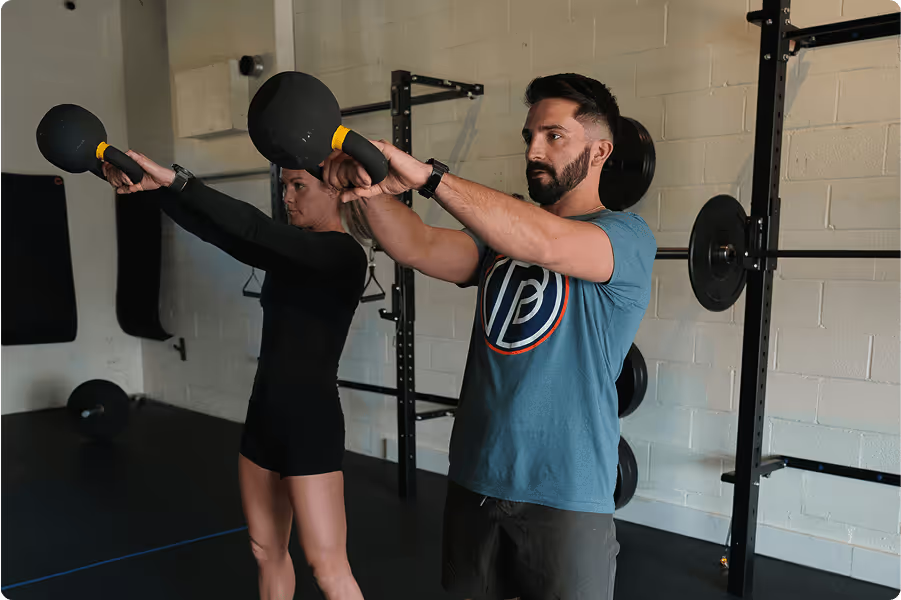
If you are an active adult, runner, or athlete in Charlotte, NC, an injury is more than a physical setback. It disrupts your lifestyle, your goals, and the training you have worked hard to build. Whether you are a CrossFitter, a trail runner, or someone returning from surgery, the most common question we hear at PowerPhysio is straightforward: "How long until I can get back to full capacity?"
The honest answer is that it depends. But understanding the key factors that shape your recovery timeline can help you set realistic expectations and make the most of every session.
Factors That Influence Your Physical Therapy Timeline
Every person heals differently. While it is tempting to compare your progress to someone else's, your recovery is shaped by several individual variables.
- Injury type and severity: A mild muscle strain may resolve in a few weeks, while a chronic tendinopathy or significant ligament injury requires a more deliberate, longer-term approach.
- Tissue healing biology: You cannot rush the biological process of tissue repair. What you can do is optimize it with expert guidance and consistent effort.
- Sleep, nutrition, and stress: These factors directly influence how your body recovers between sessions. Prioritizing them accelerates progress.
- Adherence to your plan: Consistency with your home exercise program and attending scheduled sessions are among the strongest predictors of a faster recovery.
- Your goals: Returning to daily activities requires a different level of rehabilitation than returning to competitive sport. At PowerPhysio, the goal is not just pain relief but a full return to sport or return to running at the level you were at before.
Common Injuries and General PT Timelines
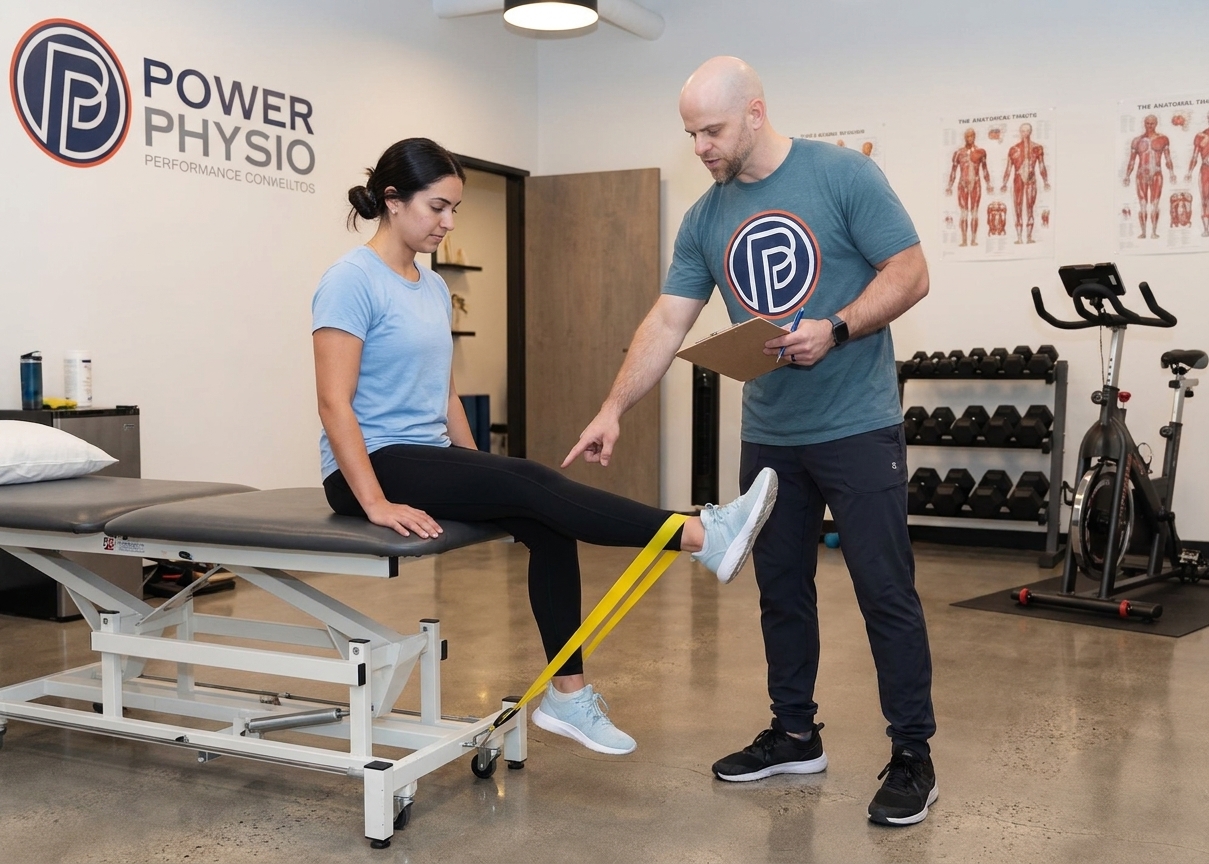
While every case is unique, the following windows reflect what patients commonly experience when receiving focused, one-on-one orthopedic physical therapy and sports physical therapy.
Ankle Sprains and Knee Pain
Runner's knee, patellofemoral pain, IT band syndrome, and ankle sprains typically respond well within 4 to 8 weeks of consistent physical therapy. Early treatment focuses on restoring stability and reducing pain. As you progress, the focus shifts to identifying biomechanical contributors, such as hip weakness or poor movement mechanics, that may have led to the injury in the first place.
Shoulder Pain and Rotator Cuff Issues
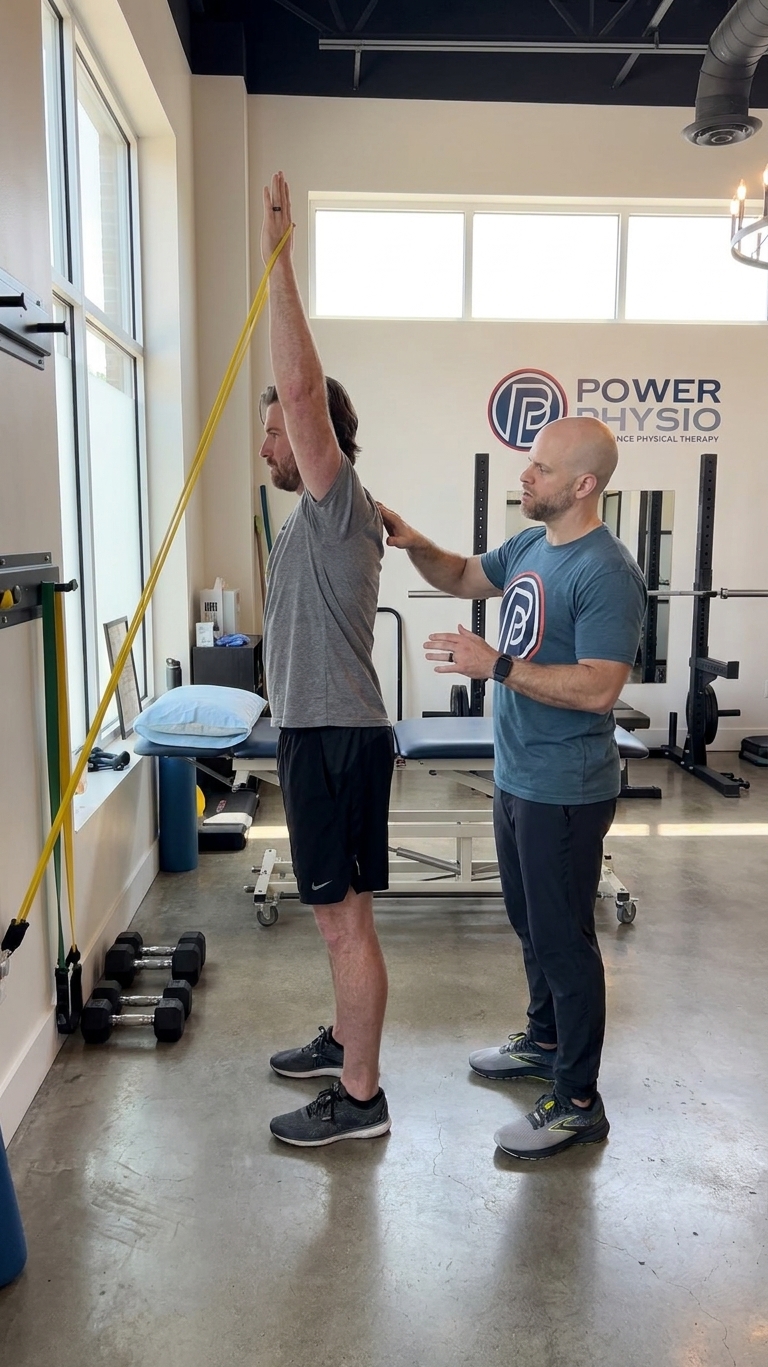
Conditions like shoulder impingement, rotator cuff strains, and frozen shoulder often require 6 to 12 weeks of rehabilitation. The shoulder demands both mobility and stability under load, especially for athletes performing overhead movements. Treatment through manual therapy and progressive strengthening helps restore full range of motion and functional strength.
Low Back Pain and Sciatica
Most cases of low back pain and sciatica show meaningful improvement within 6 to 10 weeks. Effective treatment looks beyond the site of pain to assess hip mobility, core recruitment, and movement patterns that may be contributing to symptoms. Addressing these root causes supports both recovery and long-term injury prevention.
Achilles Tendinopathy and Plantar Fasciitis
These are common overuse injuries, particularly among runners. Because tendon tissue heals more slowly than muscle, Achilles tendinopathy and plantar fasciitis often require 8 to 14 weeks of structured rehabilitation. A graded loading program is essential to rebuild tissue tolerance and support a safe return to running.
Post-Surgical Rehabilitation
Post-surgical recovery operates on a different timeline entirely. Procedures such as ACL reconstruction or rotator cuff repair typically require 3 to 12 months of rehabilitation, depending on the complexity of the surgery and your individual goals. This phased approach is critical for protecting the repair, rebuilding strength progressively, and ensuring you are genuinely ready to return to full activity.
At PowerPhysio, post-surgical rehabilitation is a core specialty. Each phase of recovery is carefully structured to match what your tissue can handle while keeping your performance goals in clear view.
What a Structured Recovery Actually Looks Like
Effective physical therapy is not a single phase. It moves through distinct stages, each building on the last.
Early Phase: Reducing Pain and Restoring Movement The initial focus is on calming pain and inflammation, restoring basic range of motion, and identifying the underlying movement issues that contributed to the injury. Manual therapy is often a key component during this stage.
Middle Phase: Rebuilding Strength and Function Once pain is under control, the emphasis shifts to progressive strengthening and sport-specific movement. This phase is where the real work of rebuilding tissue capacity and correcting movement patterns takes place.
Final Phase: Performance and Injury Prevention The final phase prepares you to return to full activity with confidence. This includes return-to-sport progressions, strength building, and strategies for long-term injury prevention. At PowerPhysio, recovery does not end when pain resolves. It ends when you are performing at the level you want to be at.
Why One-on-One Care Matters
In high-volume clinic settings, patients are often seen by assistants or managed in groups, limiting the quality of attention they receive. At PowerPhysio, every session is one-on-one with a Doctor of Physical Therapy. This means your movement is assessed in real time, your program is adjusted as you progress, and nothing is missed.
For athletes and active adults in Charlotte, NC, this level of individualized attention is not a luxury. It is what makes the difference between a recovery that gets you back to baseline and one that gets you back to performing at your best.
Take the Next Step
If you are dealing with a nagging injury or recovering from surgery, the timeline to feeling better is not fixed. It is shaped by the quality of care you receive and the consistency you bring to the process.
PowerPhysio specializes in sports physical therapy, orthopedic physical therapy, running physical therapy, and post-surgical rehabilitation for active adults and athletes in Charlotte, NC. Reach out today to schedule a comprehensive movement assessment and start building a recovery plan designed around your goals.